
The Search for Life on Other Planets
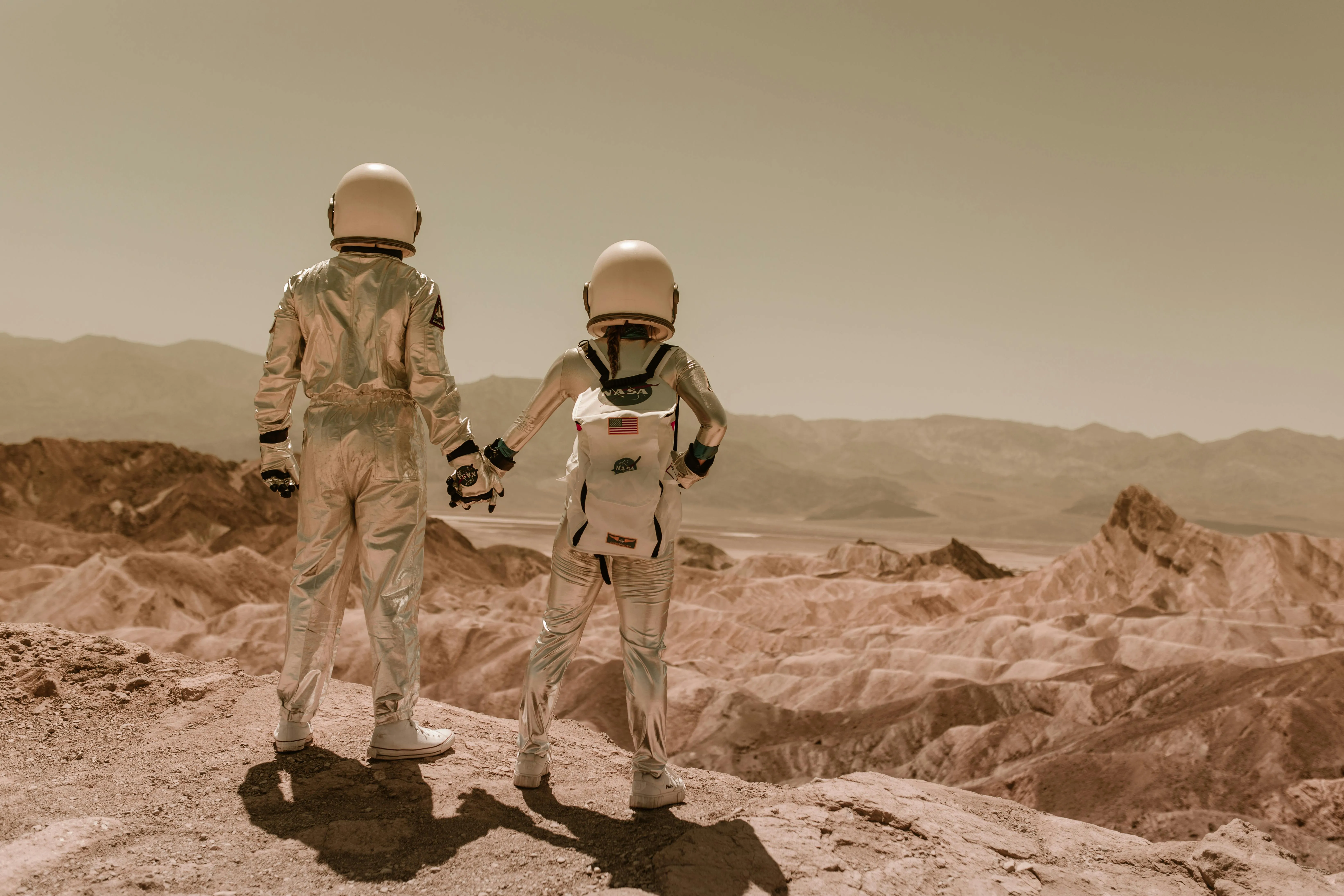
For centuries, humanity has looked up at the stars and wondered: Are we alone in the universe? The search for extraterrestrial life has become one of the most ambitious scientific endeavors of our time, blending astronomy, biology, and advanced technology to explore planets beyond our solar system and probe the possibilities of life elsewhere.
Recent advancements in telescope technology, space exploration, and data analysis have transformed the search into a precise and increasingly sophisticated scientific field. Researchers now analyze the atmospheres of exoplanets, looking for chemical signatures—such as oxygen, methane, or water vapor—that may indicate the presence of biological activity. “We’re no longer limited to speculation,” says Dr. Michael Chen, an astrophysicist at the International Space Observatory. “We can measure and model conditions on distant worlds in ways that were unimaginable a decade ago.”
Space agencies and research institutions worldwide are actively involved. Missions like the James Webb Space Telescope, combined with ground-based observatories, have identified thousands of exoplanets, some of which lie in the “habitable zone” where liquid water could exist. These discoveries are fueling hope and curiosity, as scientists study planetary compositions, atmospheric conditions, and star systems to identify the most promising candidates for life.
Technological innovations are accelerating the search. Artificial intelligence and machine learning algorithms sift through massive datasets, helping astronomers detect potential exoplanets and predict their habitability. Remote sensing, spectroscopy, and space probes complement these efforts, offering increasingly detailed insights into planetary atmospheres, surface conditions, and chemical makeup.
The quest for life also extends to our own solar system. Missions to Mars, Europa, and Enceladus are investigating subsurface oceans, ancient riverbeds, and chemical anomalies that may indicate past or present microbial life. The combination of local exploration and deep-space observation provides a comprehensive approach to understanding where and how life might exist beyond Earth.
Collaboration across disciplines is key. Astrobiologists, chemists, physicists, and engineers work together to develop experiments, interpret data, and design instruments capable of detecting subtle signs of life. Universities, private companies, and international space agencies contribute expertise and resources, reflecting the global significance and excitement surrounding this search.
Despite progress, challenges remain. The vast distances, harsh environmental conditions, and limitations of current technology mean that detecting life—if it exists—remains extremely difficult. Scientists emphasize that even subtle bio-signatures require careful interpretation, as non-biological processes can produce similar chemical signals. Nevertheless, the potential rewards are enormous. Discovering life elsewhere would fundamentally alter our understanding of biology, evolution, and humanity’s place in the cosmos.
Public interest is high. Documentaries, media coverage, and educational programs have inspired curiosity and support for space science, while also encouraging the next generation of scientists and explorers to pursue careers in STEM fields. Crowdfunding, citizen science projects, and public observatories allow enthusiasts to participate in the quest, fostering a global community united by curiosity and wonder.
Ultimately, the search for life on other planets is more than a scientific pursuit; it is a philosophical and cultural journey. Each discovery—whether a potentially habitable exoplanet, a chemical anomaly, or evidence of microbial activity—brings humanity closer to answering one of the oldest questions: Are we alone?
As telescopes scan the skies and probes venture further into our solar system, the quest continues. With each new observation and experiment, scientists inch closer to a discovery that could redefine life itself, transforming not only our understanding of the universe but also our understanding of ourselves.