
Protecting Habitats to Preserve Life
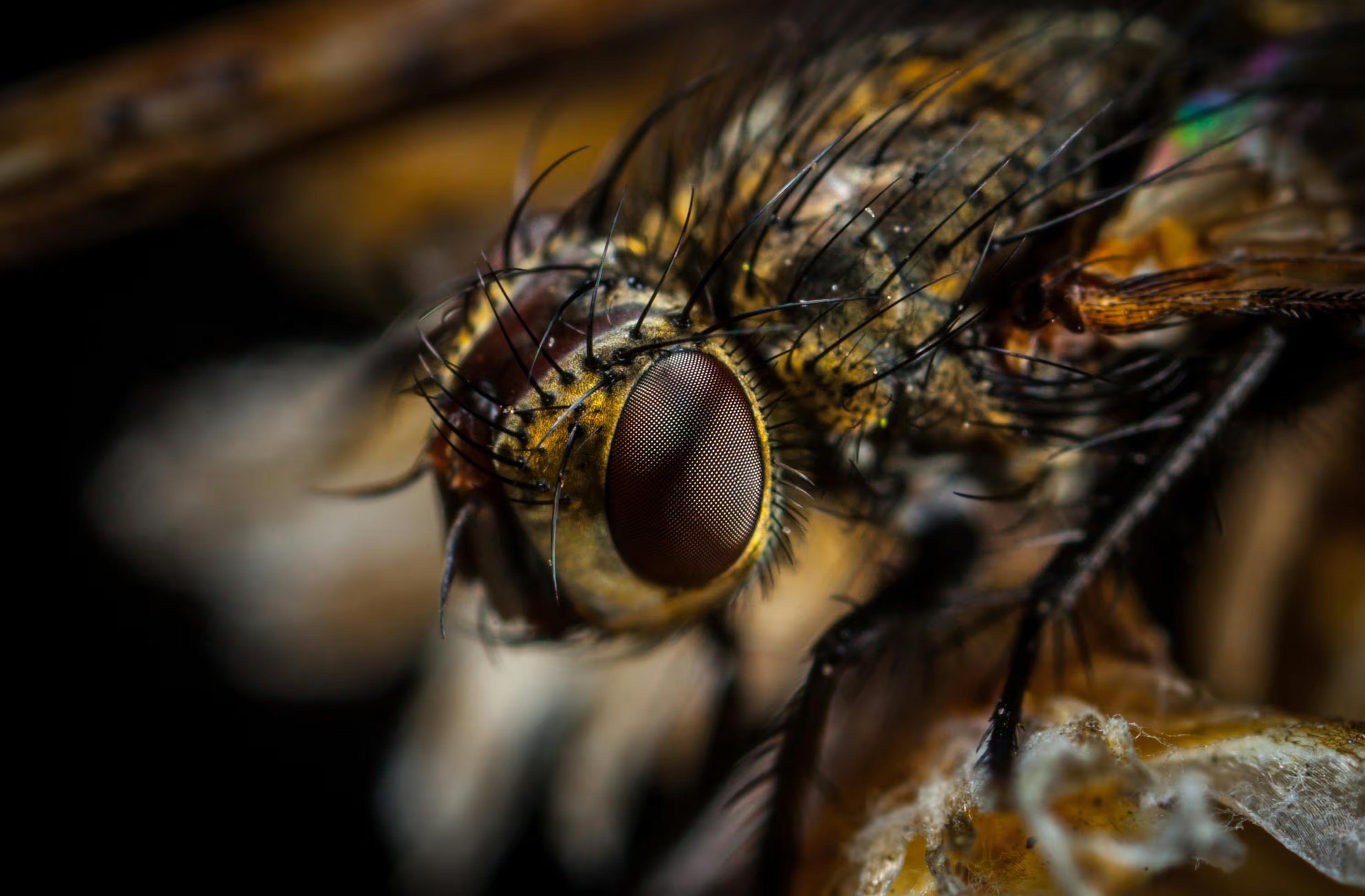
As human development accelerates across the globe, the need to protect natural habitats has never been more urgent. Scientists, conservationists, and policymakers warn that without immediate action, countless species and ecosystems face irreversible damage. The protection of habitats is not just an environmental concern—it is a critical component of preserving life on Earth for future generations.
Recent studies indicate that deforestation, urban expansion, and climate change are contributing to the loss of biodiversity at unprecedented rates. Forests, wetlands, and marine environments—home to millions of species—are being degraded or destroyed, disrupting ecological balance and threatening food security, water quality, and climate stability. “Every habitat lost is a loss of life, both seen and unseen,” explains Dr. Aisha Patel, a leading ecologist at Global Conservation Alliance. “Protecting these spaces is essential to maintaining the health of our planet.”
Conservation efforts are evolving, combining traditional protection measures with innovative technology. Satellite monitoring, AI-driven wildlife tracking, and drone surveillance are helping scientists identify at-risk areas, monitor species populations, and detect illegal activities such as poaching or deforestation in real time. These advancements allow for faster, more precise interventions and enable policymakers to make informed decisions about resource allocation and conservation priorities.
Communities living near natural habitats are playing an increasingly vital role. Indigenous knowledge and local stewardship are being integrated into broader conservation strategies, recognizing that people who rely on these ecosystems often have the deepest understanding of how to manage them sustainably. Programs that empower local communities to participate in habitat protection have shown measurable success, from reduced illegal logging to improved wildlife preservation.
Governments and international organizations are also stepping up efforts. Protected areas, wildlife reserves, and conservation policies are being expanded, while initiatives like carbon credits and sustainable land-use programs provide economic incentives to preserve natural spaces. Collaborations between nations aim to address transboundary environmental challenges, ensuring that protection efforts are coordinated and effective across ecosystems that span borders.
Despite these efforts, challenges remain. Rapid urbanization, economic pressures, and climate change continue to threaten habitats, while political and financial constraints can slow or limit conservation initiatives. Experts emphasize that addressing these challenges requires a holistic approach, balancing human needs with environmental sustainability, and integrating science, policy, and community engagement.
Education and awareness campaigns are also critical. By highlighting the interconnectedness of ecosystems, biodiversity, and human well-being, organizations aim to inspire public action and support for conservation. Social media, documentaries, and interactive campaigns are helping bring the importance of habitat protection to global audiences, encouraging sustainable behaviors and policy advocacy.
The stakes are high. Protecting habitats is directly linked to preserving biodiversity, maintaining ecosystem services, and ensuring a livable planet. Analysts predict that nations and organizations that prioritize habitat conservation will not only protect natural resources but also gain long-term economic and social benefits, from tourism to disaster resilience.
Ultimately, the message is clear: safeguarding natural habitats is a shared responsibility. Through innovation, collaboration, and commitment, it is possible to protect the spaces that sustain life and ensure that future generations inherit a planet rich in biodiversity and natural wonder. The call to action has never been more urgent—protecting habitats today is preserving life for tomorrow.